Pregnancy is an exciting yet overwhelming journey, especially when it comes to deciding how your baby will be delivered. One of the most common questions expectant parents ask is: “Which is safer—normal delivery or C-section?”
Both delivery methods have their own benefits, risks, and medical indications. Understanding these differences can help you make an informed decision in consultation with your doctor.
What is Normal Delivery?
Normal delivery, also known as vaginal birth, is the natural process where a baby is delivered through the birth canal without surgical intervention.
Advantages of Normal Delivery
- Faster recovery: Most women recover quicker compared to C-section.
- Lower risk of infection: Since no major surgery is involved.
- Shorter hospital stay
- Immediate bonding: Mothers can usually hold and breastfeed the baby sooner.
- Better respiratory health for baby: Passage through the birth canal helps clear fluid from the baby’s lungs.
Disadvantages of Normal Delivery
- Labor pain: Can be intense and prolonged.
- Risk of tearing: Vaginal tissues may stretch or tear.
- Unpredictability: Labor duration and complications can vary.
What is a C-Section Delivery?
A Cesarean section (C-section) is a surgical procedure where the baby is delivered through incisions made in the mother’s abdomen and uterus.
Advantages of C-Section Delivery
- Planned procedure: Helpful in high-risk pregnancies.
- Avoids labor pain: Surgery is performed under anesthesia.
- Safer in complications: Such as breech position, placenta previa, or fetal distress.
Disadvantages of C-Section Delivery
- Longer recovery time: Healing from surgery may take weeks.
- Higher risk of infection
- Increased hospital stay
- Possible complications in future pregnancies
- Breathing issues in babies (in some cases)
When is a C-Section Necessary?
Doctors may recommend a C-section in the following situations:
- Baby is in a breech (feet-first) position
- Multiple pregnancies (twins/triplets)
- Placenta previa (placenta covering cervix)
- Fetal distress (baby not getting enough oxygen)
- Previous C-section deliveries
- Medical conditions like high blood pressure or diabetes
Which is Safer for the Mother?
- Normal delivery is generally safer for healthy women with low-risk pregnancies.
- C-section is safer when complications arise or when vaginal delivery poses risks.
👉 In short: Safety depends on the individual medical situation.
Which is Safer for the Baby?
- Babies born via normal delivery often have better lung function and lower chances of breathing problems.
- C-section babies are safe too, especially when surgery is medically necessary—but may sometimes need extra monitoring.
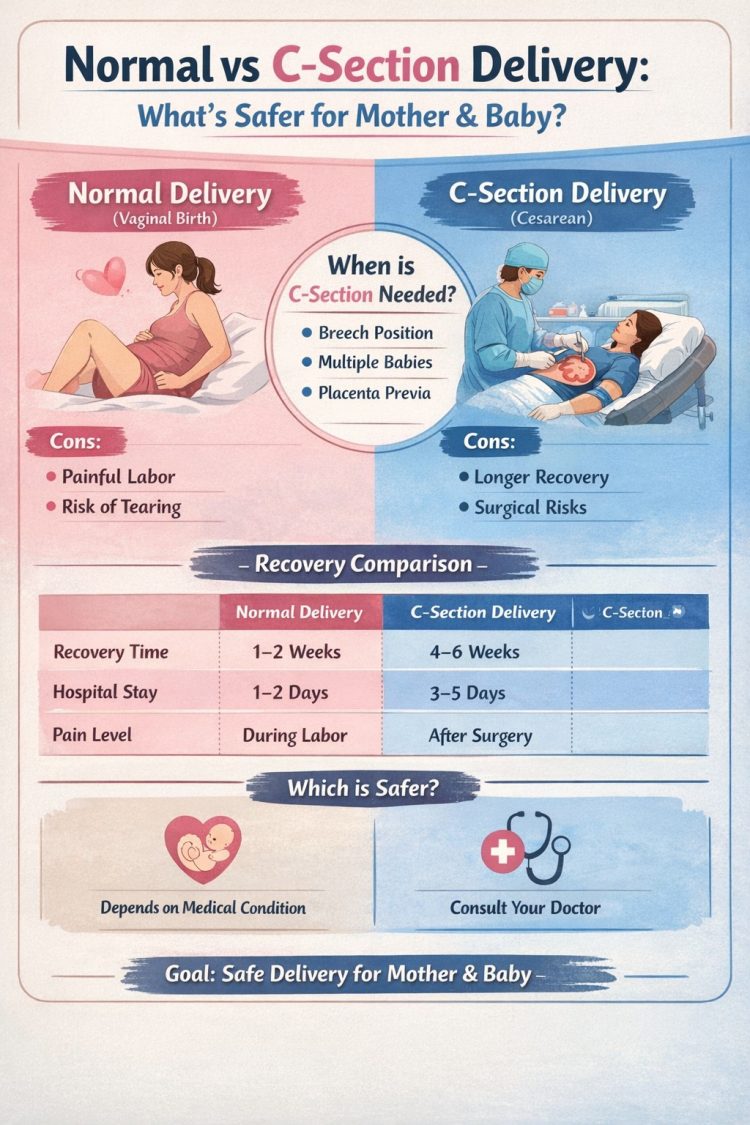
Recovery Comparison
| Factor | Normal Delivery | C-Section Delivery |
| Recovery Time | 1–2 weeks | 4–6 weeks |
| Hospital Stay | 1–2 days | 3–5 days |
| Pain Level | During labor | After surgery |
| Physical Activity | Resume sooner | Limited initially |
Myths vs Facts
Myth 1: C-section is always safer
Fact: It’s only safer when medically required.
Myth 2: Normal delivery is always possible
Fact: Some pregnancies require surgical intervention for safety.
Myth 3: C-section is painless
Fact: Surgery avoids labor pain but involves post-operative discomfort.
Tips to Decide the Best Option
- Consult your gynecologist regularly
- Understand your medical history and risks
- Stay informed but avoid misinformation
- Prepare a birth plan, but stay flexible
Final Verdict: Which One Should You Choose?
There is no one-size-fits-all answer.
- Choose normal delivery if your pregnancy is healthy and low-risk.
- Opt for a C-section if your doctor recommends it for safety reasons.
👉 The ultimate goal is a safe delivery for both mother and baby, regardless of the method.
Conclusion
Both normal and C-section deliveries are safe when performed under proper medical guidance. Instead of focusing on which is “better,” focus on what is best for your specific situation.
Always trust your healthcare provider and prioritize the health of both you and your baby.
FAQs
1. Is normal delivery less risky than C-section?
Yes, for low-risk pregnancies, but it depends on individual conditions.
2. Can I choose a C-section without medical reason?
Some doctors allow it, but it’s important to understand the risks.
3. How painful is recovery after a C-section?
Pain varies but usually lasts longer than normal delivery recovery.